
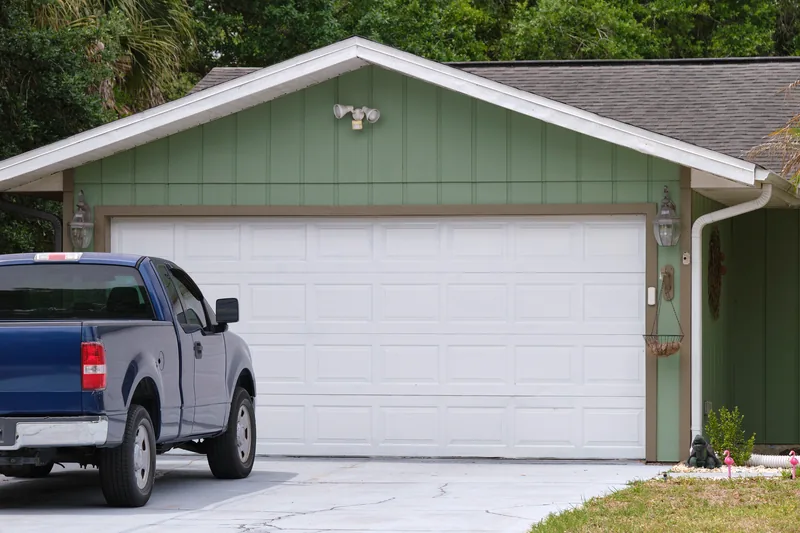
Your garage was never built for this. Not for a full-size work truck, not for a compressor, a full tool wall and a season’s worth of materials staged for the next three jobs. That is not a personal failing. It is math that stopped working a while ago, and plenty of contractors are finally doing something about it.
This is not a story about contractors who let the garage get cluttered. It is about a real mismatch between what a home garage is built for and what a working trades business needs, and about the things contractors who already made the move wish someone had told them first.
The Garage Math Has Gotten Worse, Not Better
If your garage feels smaller than it used to, part of the reason is what is going into it. A home garage is sized for household cars and household things, not for a business.
Full-size work trucks are long, and a pickup with a ladder rack or a service body takes up most of a standard garage before a single tool goes in. Add a tool wall, a workbench and enough staged material for the week, and the space runs out fast.
This is not about owning too much stuff. It is a mismatch between what garages were built for and what a working contractor needs to fit inside one. A garage that worked when the business was one person and a few tools is now up against a bigger vehicle, more tools and a business that has grown past what a space next to the kitchen was meant to support.
Why are contractors leaving their home garage for a contractor bay?
Contractors are leaving home garages because the space was never built for work trucks, equipment and material staging. Organizing helps for a while, but it cannot add room. A contractor bay is built for that daily use in a way a residential garage never was.
The Rules Are Different at Home
Beyond the space itself, a home address comes with its own limits. Neighborhood and HOA rules often restrict business activity at a home, from regular deliveries and crew visits to signage and parked work vehicles. Those rules vary by city and neighborhood, so check what applies to your own address and your own trade.
A contractor bay takes that question off the table. It is built for active business use: you run the business from it, receive deliveries at your bay when you are there or through your own lock-box, and keep the work vehicles out of the driveway.
It also takes the worry off what sits in the garage overnight. At Cornerstone Contractor Bays, every location has 24/7 controlled access and 24/7 video surveillance, and early starts are your call, not the household’s.
Can I run a contracting business out of my home garage?
It depends on where you live. Local and HOA rules often limit regular business activity, deliveries and work vehicles at a home address, and they vary by city and neighborhood, so check the rules for your own address and trade. A contractor bay is built for active business use, so you can run the business from it every day.
It’s Not Just You
It is not just general contractors making this move. Electricians, plumbers, landscapers, roofers and other trades run into the same wall once the business outgrows the house. When that many different trades land on the same answer, it is worth paying attention to why.
It usually happens the same way: the problem builds slowly, one tool purchase and one staged job at a time, until the garage stops working. If you have been feeling the squeeze, you are not early and you are not late. You are simply catching up to what the garage has been telling you for a while.
And there is pride in it. Moving out of the garage is a signal to your crew, your clients and yourself that the business has reached a new level.
What Contractors Wish They’d Known Sooner
Talk to enough contractors who have already made the switch and the same handful of lessons come up again and again.
Measure your actual equipment before you sign anything, not after. A bay that looks spacious in a listing photo can still be the wrong depth for your longest ladder or the wrong door height for your van with a ladder rack. Ask about lease flexibility specifically, since a rigid multi-year commitment defeats a lot of the point if your crew size or truck count changes within the year. And do not wait for a crisis to force the decision. The garage usually stops working long before anyone admits it.
The other lesson that comes up constantly: think past just the bay itself. A dedicated bay solves your daily work and equipment problem, but plenty of contractors also end up needing a separate place for overflow inventory or seasonal equipment, and somewhere to actually handle the admin side of the business, quotes, invoicing, client calls, that a bay was never meant to double as. Planning for that from the start avoids a second scramble a few months after the first one.
A smaller lesson, but one worth mentioning: do not underestimate the time you get back once loading and unloading stops being a daily negotiation with a cramped garage. A few minutes saved every morning adds up across a full year of workdays.
What do contractors wish they’d known before renting a bay?
Contractors most often wish they had measured their actual equipment and vehicles before signing, confirmed real lease flexibility instead of assuming it, and made the move sooner rather than waiting for the garage situation to become a genuine crisis. Many also wish they had planned for overflow storage and admin space needs from the start, rather than treating the bay as a single fix for every space problem at once.
Getting the Garage Back
There is a quieter reason this move matters too, one that shows up less in the data and more in the actual conversations contractors have at home. A garage that has become a full-time shop is a garage the rest of the household has effectively lost. The car parks in the driveway year-round. Holiday decorations end up in a closet instead. A workbench takes up the space where a bike rack or a kid’s project used to go.
This tension builds quietly over months, not all at once. Nobody sits down and decides the garage is now a business asset instead of a household one. It just happens, one tool purchase and one staged job at a time, until the day someone asks when they are getting their car back and there is not a good answer.
Moving the business into a real bay is not just an operational upgrade. For a lot of contractors, it is also the moment the garage actually becomes a garage again, and that is worth something too, even if it never shows up on a spreadsheet. The business gets a real home built for what it actually needs, and the house gets to go back to being a house.
Two Familiar Situations
Picture an electrician who has worked out of a two-car garage for a few years and finally moves into a bay. Within a month he has a real commercial location to operate from, room to charge tools overnight, and a garage his family has not seen empty in years.
Or a landscaping crew running mowers, trailers and seasonal equipment out of a garage plus a rented storage unit. Moving the daily work into a bay and keeping the off-season equipment in the storage unit gives them one place to run the business and one place for what they touch twice a year, instead of a garage trying to be both.
Contractors in situations like these rarely describe the decision as dramatic. They describe it the way people describe any overdue change: relief that it is done, and a little regret that they waited.
Ready to Make the Switch?
If the garage math has stopped working for you, the good news is you do not have to jump straight to a full warehouse lease to fix it. A contractor bay closes that gap directly, built for the exact daily reality a garage never could handle.
If you are still weighing a bay against self storage or a full warehouse lease, our full comparison walks through that decision first. Once you are ready to think about size, our sizing guide covers what fits your trucks, tools, and crew. And if cost is the question holding you back, here is what drives the price of a bay.
The contractors who made this move already will tell you the same thing: they wish they had done it sooner.
For the hands that build.